Willkommen im Loxone Community Forum. Um alle Funktionen nutzen und sehen zu können, registriere dich bitte zuerst. Dies gilt auch für das herunterladen von Dateien.
there are couple of versions 4-8-16 relays, RJ45, wifi and so on...
I can be controlled via WebAPI commands (see attachment) ...so i guess it can be useful and cheap relay extension for loxone.
Or does anybody tried it already?
RS485 extension is extra cost...
LAN version can be connected to your network and send commands for WebAPI or UDP via loxone.
If you can do some arduino programing you can get this 8x relay one or 16x relay one: http://www.aliexpress.com/item/Free-...340787083.html - 4eur
then some arduino board for 10e + LAN shield 6e
I guess arduino can be extented with more relay boards up to i dont know...(not a adruino owner, nor programer , just my guess)
Im considering and googling about those will be glad if someone can add more info
That KMTronic is in nice box for DIN rail which is a plus...as those "nacked boards" doesnt have DIN boxes or i havent found one , just such adapters:
Take a look at my product based on Arduino MEGA - called Railduino at www.sedtronic.cz (not English version yet). You can use it as a Modbus RTU slave device with Loxone.
Features:
24x digital inputs - 24V DC
8x relay outputs - max 5A at 230V AC
3x analog inputs - 0 - 10V - 1024 bits
4x PWM outputs - 2A / channel, max 24V DC
1-wire bus - up to 5 pcs of DS18B20 temperature sensors
RS485 - Modbus RTU protocol
USB - PC debugging and program loading
Ethernet - connection to LAN network - optional function - Modbus TCP protocol
LED status
reset pushbutton
DIP switch - RS485 address (4bits = up to 16 Modbus slaves)
If someone interested in more details, just let me know
im slovak so i can understand....but lets keep it here in english.
Nice job man but i need more digital output relays than inputs...also if i get it right i need to buy also modbus module? or can be controlled via LAN as well? EDIT: found an answer it can be connected also via LAN (modbusserver) , so next question: Are there any differences/disadvantage between those 2 controlling ways?
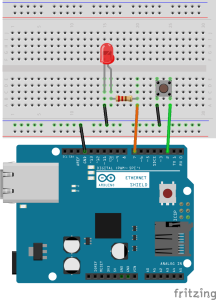
Ive ordered arduino uno board + ethernet shield , so ill try to build web server where to which i can send commands from some loxone module like "http://ip/relay1on" "http://ip/relay1off" so on...
Actually havent done anything with arduino before , but there are many guides how to do that so ill try...
well, yes, you are right - you can use two different ways to connect to my module - RS485 or LAN - using Modbus protocol. There are very important differences between them - RS485 is much faster, reliable but not for long distances. LAN is much slower, usually using more network components (can lead to not so reliable comm.), but can be used for long distances (all over the world). My recommendation is to use serial RS485 connection.
The other thing is communication protocol - Modbus is safer, reliable.. UDP protocol is not so safe (no CRC check ..) so you must note this when using these relay boards you mentioned..
So when using Loxone Modbus extension you can connect to Railduino module and use it as a IO module with features described in post earlier.
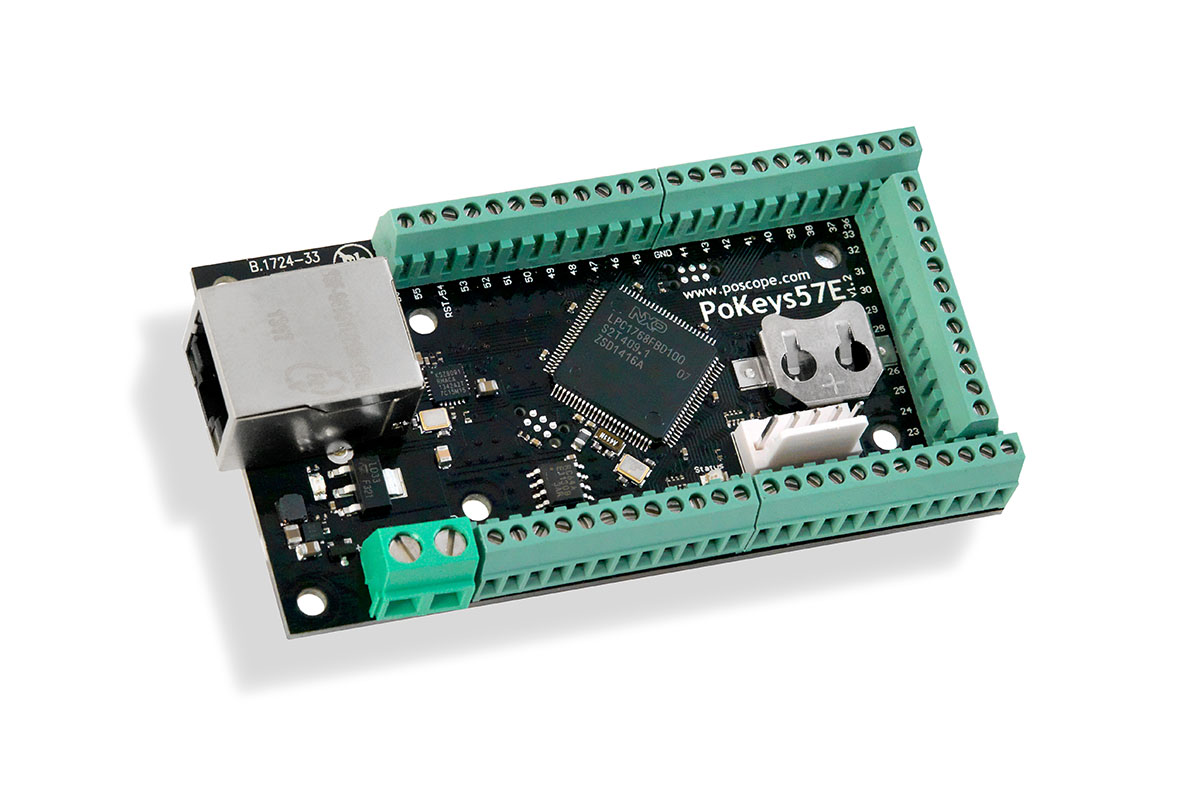
Hi, you doesn't look at Polabs in Slovenia ? Why not with Pokeys57E.
The module has up to 55 inputs and / or outputs.
In addition, there may be a number of analog or digital sensors, and and
PoLabs its in Slovenia (former Yugoslavia), not Slovakia , but ive check it and seems really good device to try.
Ive checked also you page, i do understand some german but its bit hard the tech stuff for me.
I'm currently in the process of planning my installation with Loxone... I was also looking for some alternative relays, but my req was that it could fit in the main electrical panel... This is what I've found:
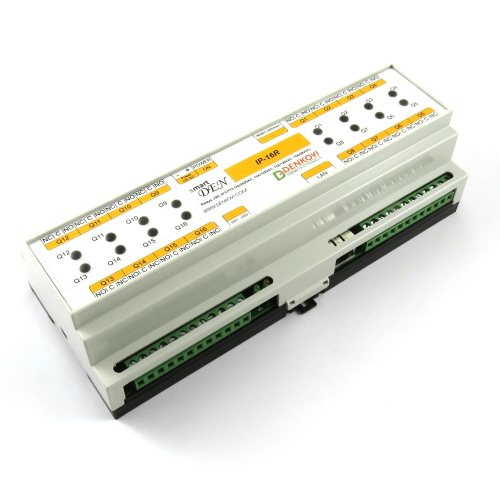
SmartDEN IP-16R is a LAN relay module with 16 SPDT relays for remote control with integrated web server for set-up, snmp-v1 and http/xml/json support for embedding in other systems. The built-in real time clock allows to organize schedule stand-alone work without connection to computer. Suitable for Industrail and Home automations, irrigation systems and network watch-dog systems. Works with Home Assistant, Domoticz and OpenHAB home automation systems as well as with Node-RED IoT platform. Supported by DRM and DRMv3 Software, DAE-iModule iOS App and DAE-aModules Android App plus many source code examples. This is the version with DIN rail box.
They can be used with http and snmp and I think they should work together with Loxone...
denkovi is basicaly boxed version or relays ive posted in 1st post, just in a DIN rail box...also the price is 2-3x higher
Way of controlling those relays will be the same via LAN - WebServer
I hope this is the right place otherwise please delete.
I'm new here and start with my Loxone Project. I have quite a lot of outputs I would like to use this board. I am connected and can configure it. Can anyone tell me how I can address the outputs in the Loxone?
Thank you in advance
Zuletzt geändert von sascha100; 21.03.2016, 18:27.
I'll use the RS485 Version of the KMTronic...
Why...
- less Standby-Consumption as the LAN Version
- 10A Relais instead of 5A from the Arduino Relais-Board
- easy to control it with the Loxone MS
- Price... Yes you need an additional Ext RS485, but if you need 6,7... Boards it make sense because of the cheaper price of each board.
Dear hismastersvoice, I'd like to proceed in this direction too, same concern as for Stand-by current, also I'd like to have everything "under" MiniServer direct control, especially with "time crytical" commands that can be light switches etc.
Since I'm already using a Modbus extension, I'd also like to go for KM-Tronic Modbus relay. What do you think about this ?
thank you for your repeated hint on KMTronic. THANK YOU
I've ordered the same times and it functions perfectly in a small test assembly. Thanks also for your How to do it.
One question I have: there is an alternate to Pokeys 57? It runs in my test setup but I am not so happy with the 5V.
I have the pcb developed therefore, with a voltage converter works Pokeys with 12V or 24V.
The inputs are protected by optocouplers and the outputs connected via transistor array relay the insurance compliant can be performed.
Look out the insulation distances of your relay board:
It is a possible voltage of 400 Volts available
if you do a normal backup allocation to 3 phases.
Wir verarbeiten personenbezogene Daten über Nutzer unserer Website mithilfe von Cookies und anderen Technologien, um unsere Dienste bereitzustellen, Werbung zu personalisieren und Websiteaktivitäten zu analysieren. Wir können bestimmte Informationen über unsere Nutzer mit unseren Werbe- und Analysepartnern teilen. Weitere Einzelheiten finden Sie in unserer Datenschutzrichtlinie.
Wenn Sie unten auf "Einverstanden" klicken, stimmen Sie unserer Datenschutzrichtlinie und unseren Datenverarbeitungs- und Cookie-Praktiken wie dort beschrieben zu. Sie erkennen außerdem an, dass dieses Forum möglicherweise außerhalb Ihres Landes gehostet wird und Sie der Erhebung, Speicherung und Verarbeitung Ihrer Daten in dem Land, in dem dieses Forum gehostet wird, zustimmen.
Kommentar